I have been around computers since I was a kid plugging IBM keyboards into the back of a beige tower running MS-DOS. I remember dialing into BBSes before the public internet existed in any usable form, watching Windows 95 launch, building my first websites in raw HTML in a notepad window long before drag-and-drop was a thing. I am thirty-six now, and the technology I grew up alongside is more or less the technology I still build with, just thirty years more capable.
This year I founded Bright Presence Digital, a one-person studio I run from Western Pennsylvania for clients across the United States. The work is the same wherever the school sits: building and hosting websites for organizations that deserve real ones. Schools, churches, nonprofits, municipalities, medical practices, small businesses. Custom-coded, hosted on infrastructure I personally own and run, supported by the same person who built it.
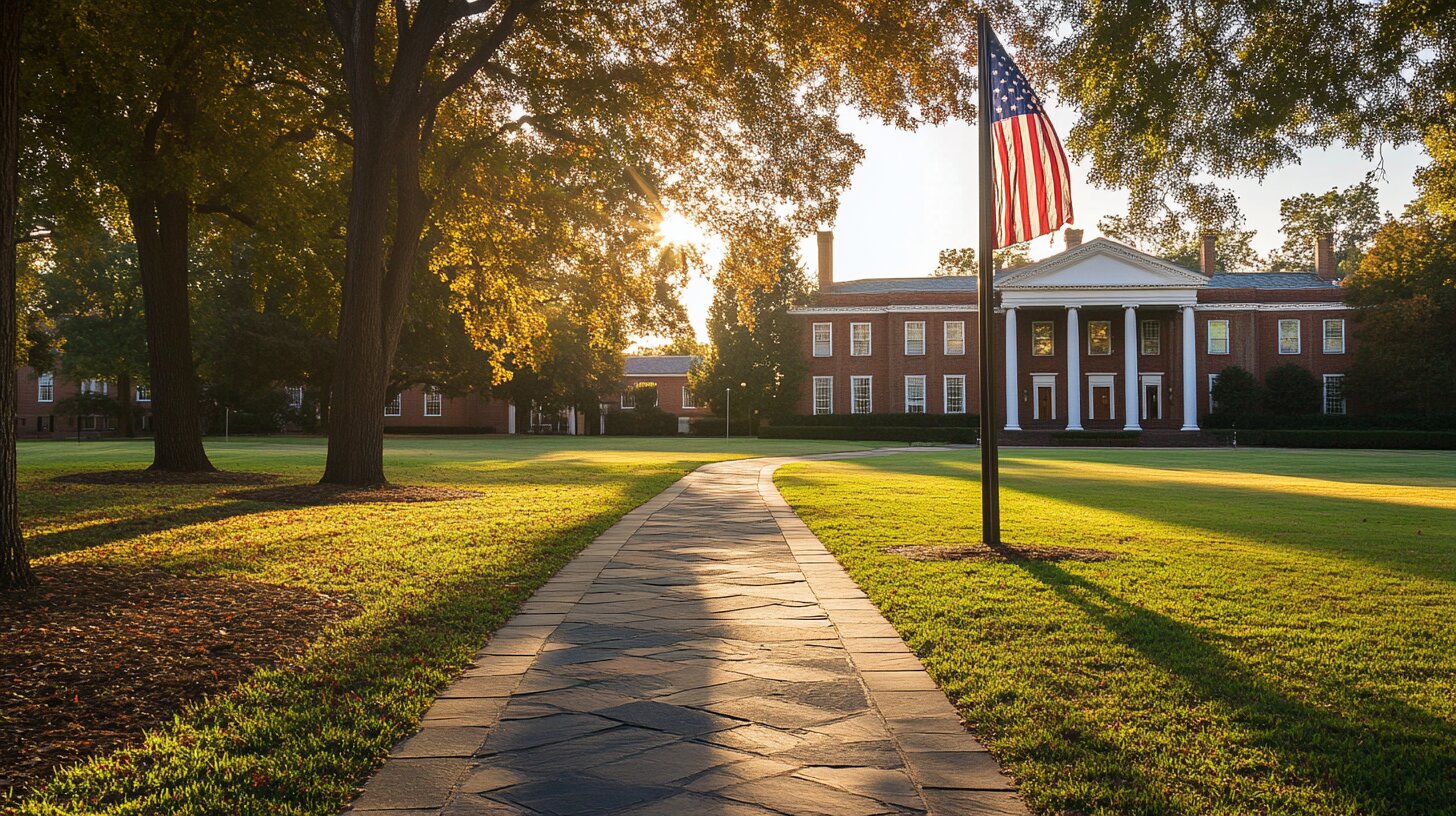
This article is about one specific thing the studio has produced: a fully functioning private K-12 school website I designed, coded, and stood up at academy.brightpresencedigital.com. The school is fictional. The site is real. And it is the most fun I have had on a project in a long time.
Open the demo and click around
Before reading any further, open it: academy.brightpresencedigital.com.
Look at the homepage. Click into a school division. Open a news story. Visit the athletics page. Pull up the board and staff directory. Try the calendar of events. Tap through it on your phone and watch how the layout reflows. Notice that nothing lags, nothing flashes, nothing waits.
Then come back. The rest of this article is about why it works.
What it actually is
The demo represents a fictional independent K-12 day school called BPD Academy. The site has:
- A homepage with a custom hero, a head-of-school welcome, news, events, and admissions touchpoints
- Three division pages (Lower School, Middle School, Upper School), each with its own academic identity
- A real news engine with article pages, tags, and an archive
- A live events calendar
- An athletics roster, photo treatment, and game schedule pattern
- Board and staff directories with bios
- A parent portal pattern (gated section structure)
- A faculty careers page
- A complete admin CMS so the hypothetical communications director can publish news and edit pages without a support ticket
- The full set of legal pages a real school site would carry
Some of the under-the-hood things I am proud of
The fun part of this kind of project is the stuff visitors never consciously notice but always feel.
Sub-second load on a phone, every page. Lighthouse performance scores in the high nineties across the site. No bloated framework. No tracking pixels. No third-party fonts loaded synchronously. Just hand-tuned HTML, tight CSS, and a small Express back-end on a private server. When you tap a link, the next page is there.
A real CMS my hypothetical communications director could actually use. Not a vendor admin panel with a thousand tabs and a help wiki. A small, fast inline editor that turns pages into editable surfaces with one toggle. Add a news story, schedule it, watch it appear on the news page and the homepage and the RSS feed simultaneously.
Personalized previews. When a real school clicks a tailored link, the site recognizes their slug and quietly tunes the welcome copy to feel like a preview of their own school's potential build. It is subtle, but it lands.
WCAG 2.1 AA at delivery. Skip-to-content links, focus rings, semantic landmarks, accessible color contrast, keyboard-navigable menus, alt text on every image. Most school sites I check fail at least one of these. The Academy demo passes them all, on purpose, on every page.
Schema markup that Google can actually use. Article schema on news posts. Event schema on the calendar. Person schema on staff bios. Organization schema on the homepage. Breadcrumbs on every nested page. The kind of attention to structured data that takes a couple of extra hours per page and pays off for years in search.
What it is not
It is not a template. There is no theme to download.
It is not generic. Every layout decision was made for this specific imagined school, and the design language reflects that.
It is not behind a sales call. You can click through every public page right now without filling out a form, talking to anyone, or waiting on a demo invite. That part was deliberate.
Why I built it
A friend who serves on a small private K-12 board mentioned what they were paying their current website vendor and asked me, half-joking, whether I could do better. The honest answer was that I could not just say so, I would have to build something that proved it. So I built something that proved it.
The Academy demo is now the canonical answer I give whenever a school asks "what does the alternative look like." Instead of a slide deck or a pitch document, I send them a URL. They click around. They form their own opinion. That is the entire pitch.
If you happen to be involved with a private school, a board, an admissions office, or a head-of-school search committee, and any of this resonates, the simplest thing to do is open the demo. If what your current setup gives you feels measurably better than what the demo gives a fictional school, your vendor is earning their fee. If not, that is a conversation worth having internally.
BPD Academy
Independent K-12 academy. Homepage, school divisions, academics, admissions funnel, news engine, events calendar, athletics, board and staff directories, parent and faculty portals, and a complete admin CMS. Click around the way a family evaluating your school would.
Tour the demo →How to find me
Bright Presence Digital is at brightpresencedigital.com. The studio is intentionally small: one developer, real conversations, work I personally stand behind. I take on the projects I am excited about, wherever in the country they sit, which means I am not for everyone, but the ones I work with get my full attention.
If the Academy demo lands and you would like to talk about what your school's site could be, my email is in the footer.